
Regulate & release
Private breathwork sessions
For when your body needs somewhere to land before your brain can catch up.
When life gets heavy - really heavy - there's often a point where thinking about it more just doesn't help. You've analysed it. You've journalled it. You've talked it through with anyone who'll listen. And you still feel like you're carrying something you can't quite put down.
That's usually the sign it's not a thinking problem - it's a nervous system one.
Breathwork is one of the fastest, most direct ways to give your body some relief - and it works even when you're not sure what you need, can't quite name what's wrong, or are too exhausted to do anything that requires much of you.
Is this you?
This might be a good place to start if…
Everything feels like a lot right now, and you just need somewhere to land.
Your body feels tense, wired or wrung out - and you can't remember the last time you properly switched off.
You feel like you're bracing for something, even when nothing's actually wrong right now.
Slowing down makes you feel worse before better - restless, agitated, like something might catch up with you if you stop.
You're tired in a way sleep doesn't seem to fix.
You've tried the usual things (exercise, journalling, ‘getting on with it’) and they're not quite touching what's underneath.
You're navigating something difficult and want support that doesn't require you to have it figured out first.
You're not in crisis - you just want to take better care of yourself and breathwork sounds like it might be supportive.
You're simply curious and want to try it in a safe, supported space.
(You don't need a reason. "I just want to feel better" is completely valid.)
Right, but what actually IS breathwork?
Fair question.
Breathwork is the use of specific breathing techniques to influence how your body and mind feel. It sounds almost suspiciously simple - you've been breathing your whole life, after all - but breathing is one of the very few things your body does automatically that you can also consciously control. And that makes it a surprisingly direct route into your nervous system.
Try it right now, if you like: take a deep breath in - not forced, just full - and really notice how it moves through your body. Pause for a moment at the top. Then let it go completely. Not a controlled exhale, just... drop it. Like putting down a heavy bag you've been carrying without realising it.
Notice anything? Even a little?
That's the whole idea, just a taste of it.
When we're under prolonged stress or carrying something heavy, our bodies often get stuck in a kind of low-level high alert. Shallow breathing, physical tension, that permanent undercurrent of 'something isn't right.' Specific breathing practices can interrupt that pattern and help your body shift out of survival mode - reducing anxiety, releasing physical tension, and creating a bit of space inside where there wasn't any before.
Most people leave feeling calmer and clearer. Some feel emotional release. Some feel like they've had a nap, but a good one. Some just feel... quieter.
If you're the type who wants to know why something works before you try it - fair enough, same. Breathwork is increasingly used in clinical and therapeutic settings for stress, anxiety and nervous system regulation. As one of my clients put it better than I ever could: "As a former doctor I was amazed at what kind of state of mind I could be transported to through your breathwork."

A few things you might want to know about breathing with me…
-
Sessions are one-to-one, private, and tailored to you. Every session is a little different, but here's the general shape of it:
We start with a chat - we'll discuss what's most present for you right now, and what you're hoping for from the session. Your first session also includes a Breath Pattern Analysis - we'll explore your breath in a few different positions to find where you get your fullest, most natural breath, and help you get more in tune with your own breathing pattern and body. After that, you're welcome to breathe wherever feels best on the day - it's normal to move about and shift position during the session.
Then I guide you through the breathwork itself - staying present and connected to your breath, body and emotions, sometimes with tools like toning, movement or affirmations to support whatever wants to move or release. Afterwards, there's time to simply rest and let things settle, followed by space to reflect - chat, journal, or just sit with it, whatever feels right.
There's no pressure to perform. No right way to feel. No expectation that something dramatic has to happen (though sometimes it does, and that's fine too).
-
Breathwork can bring up physical sensations - tingling, shaking, changes in temperature, sometimes movement you didn't plan, like twitching. All of that is normal and welcome. Emotionally, things can surface too - joy, sadness, anger, sometimes a memory or insight, sometimes just a feeling with no story attached. Whatever comes up is exactly what's needed in that moment.
Occasionally people notice things shifting even before the session - once they've booked, something starts to loosen. That's normal too. I'll give you aftercare guidance to support you afterwards, and I'll check in with you in the days that follow.
-
Yup - very. I was doubtful myself once, and so was Nicola Price, the founder of the method I trained in - she thought it was a bit of a nonsense until she was forced online during Covid, and found it could be just as powerful. One third of my training (and half of my case studies) was focussed specifically on creating safe and powerful online experiences.
It also makes breathwork accessible to people who can't easily come in person, and there's something lovely about being able to do the work at home, then simply rest afterwards without a journey ahead of you.
Many of my own clients work with me online - in fact, the former doctor testimonial below was from a series of online sessions. I also attend regular online sessions myself, for my own practice. The one thing that's genuinely different is touch, which we adapt for by using self-massage techniques instead.
-
In-person sessions include hands-on tools I can't bring through a screen - touch, Tibetan bowls, a weighted belly bag, scent, that kind of thing. There's also the space itself to account for - and yes, my coach did once ask if I charged more because I had to tidy the house. (I do. Charge more. Also tidy.)
That doesn't make online the lesser option - just a different one. Even touch, one of the main tools I use, isn't off the table online - I can guide you through self-massage as part of the session. You get the practice at home, in your own space, with nowhere to be afterwards - and some genuinely powerful sessions happen online (the former doctor testimonial below is one of them). It's really about which setting suits you, not which one works better.
-
My main method is Inspirational Breathing - a gentle, conscious connected breathing pattern: continuous, rhythmic breathing, without the pauses you'd normally have between breaths. It's calming rather than activating - nothing intense, nothing that tips into overwhelm - just a steady, sustained rhythm that's surprisingly powerful in what it can shift.
I also draw on other practices and tools when needed - sound, movement, visualisation - and I'll adapt the approach depending on what's right for you medically, or simply how you're showing up on the day. This isn't one-size-fits-all.
-
I trained directly under Nicola Price, founder of Inspirational Breathing - over 350 hours of training and supervised case studies, and I'm still supervised now.
I'm also active in the wider Inspirational Breathing community: supporting the training of new practitioners, joining weekly community breathes, and keeping my own daily breath practice. This isn't just something I do with clients - it's something I live.
-
Fair worry, and an important one. Breathwork isn't a regulated industry, and there is some genuinely bad practice out there - particularly in large group settings, where people can have big, overwhelming experiences with little individual support around them.
That's not how I work. Long before I trained as a breathwork practitioner, I spent years supporting people through some of the hardest, most unsafe-feeling moments of their lives - and helping someone feel held while they're experiencing something difficult isn't a skill I picked up alongside breathwork, it's one I brought to it. It was also a core part of my training itself, not an afterthought.
Sessions with me are one-to-one, paced to you, and you're never left to have a big experience alone. If you've got any concerns at all, get in touch before booking and we'll talk it through.
-
In-person sessions may include light supportive touch as part of the practice - always with your consent, and always something we'd talk through together first, never assumed.
-
Before your first session, you'll fill in a short, confidential medical questionnaire, so I know what to be mindful of and can adapt the session if needed. If you've got any concerns before then, just get in touch and we’ll talk it through. I'll also send you full guidance on how to prepare for your session.
-
A Breath Pattern Analysis is a gentle, practical 30-minute starting point with no conscious connected breathing - and if you go on to book a full session, the £40 comes off the cost. Find out more about Breath Pattern Analysis.
-
50. Please pay in advance…JUST KIDDING!!! 🤣
Here's the honest truth: from your very first session, you'll leave with everything you need to build your own daily practice - and if that's the only session we ever have, that's genuinely enough. A regular self-practice, even a short one, will change your life, FOR REALS.
And there's also nothing quite like being guided and held by someone else, rather than doing it entirely alone (you'll see!). While I have a daily practice, I personally find it very hard to recreate the experience of a full breathwork session by myself (hello, monkey mind! 🤦🏼). So I have between two and five guided breathes a month.
There's no "correct" number of sessions. Some people come once and that's exactly what they needed. I have regular clients who've come to me twice a month for years.
Think of it a bit like a massage - you wouldn't book six and expect to never experience muscular pain again. Can you massage yourself? Sure. Does it feel better, fuller, more effective coming from someone else? Also yes. It's something you come back to whenever you need it, for as long as that's useful to you.
Online - £100 | In person (Sheffield) - £120 | 90 minutes
Curious about the difference in price? See "Why is in-person more expensive than online?" above.
“Mia’s breathwork is really helpful for my ADHD brain. Normally I can’t organise my thoughts, they come too fast. But breathwork helps me still the rushing thoughts and think through things calmly.”
“As a former doctor I was amazed at what kind of state of mind I could be transported to through your breathwork. There was so much safety and comfort, and the world outside ceased in the moments that we were together.”
“The breathwork soothed my frazzled nervous system so I could safely be with my emotions, and focus on the big life questions.”
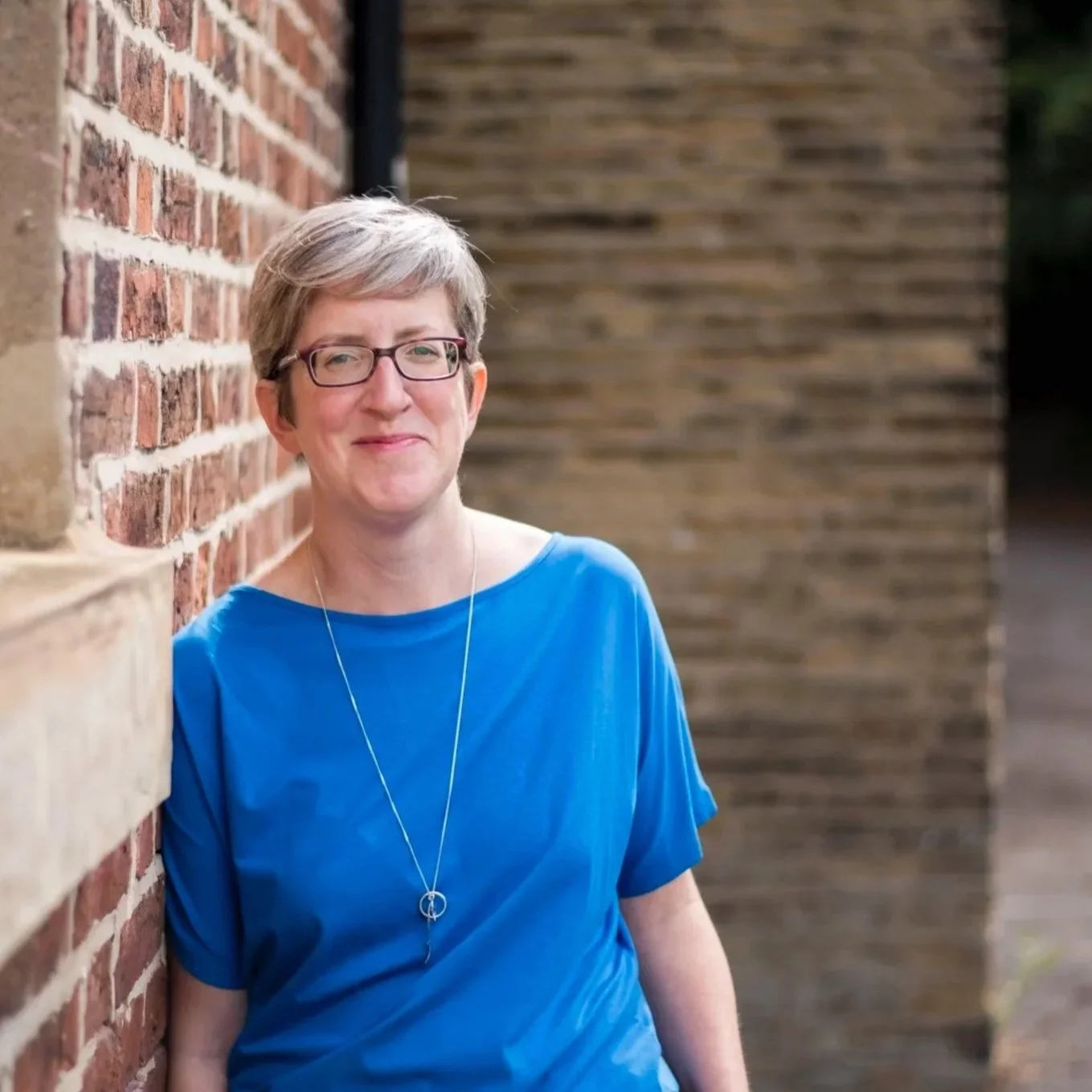
Who you’ll be working with
I’m Mia. I work with capable women navigating big, unchosen life changes.
I bring warmth, honesty, and a very practical approach - with a firm belief that you don’t need fixing, just support that actually fits your life. I take the work seriously, but not myself. There will be space for breath, truth, and the occasional dry laugh at how absurd life can be.
Tea is often involved.
Ready to book?
Curious about the difference in price? See "Why is in-person more expensive than online?" above.
Not sure if this is right for you? Drop me a message and we'll work it out.
Looking for something more structured?
Breathwork sessions are a great starting point - or a standalone support whenever you need it.
If you're "coping" - but running on empty - and want a structured six-week reset to help you actually make the changes you already know would help, Retune - a 6-week programme could be worth a look.
If you're navigating a big, unchosen change in life and want ongoing support while you find your feet, Redesign might be the better fit.